

The rotary switch is the part every cooler user touches every day. It is also the part most likely to fail by overheating. A loose contact or a weak body can melt, smell and, in the worst case, catch fire. So when you buy rotary switches for air coolers, the question is not just “does it click” — it is “will it carry the load safely for years”.
We have run a dedicated rotary switch division in our Delhi facility since 2015. Here’s what to check.
1. Current rating vs your load
Cooler switches on the market range from about 4A to 16A. The switch must carry the fan motor’s current plus the pump on the same circuit, with headroom for the start-up surge. A switch running close to its limit heats up a little every day until the contacts fail.
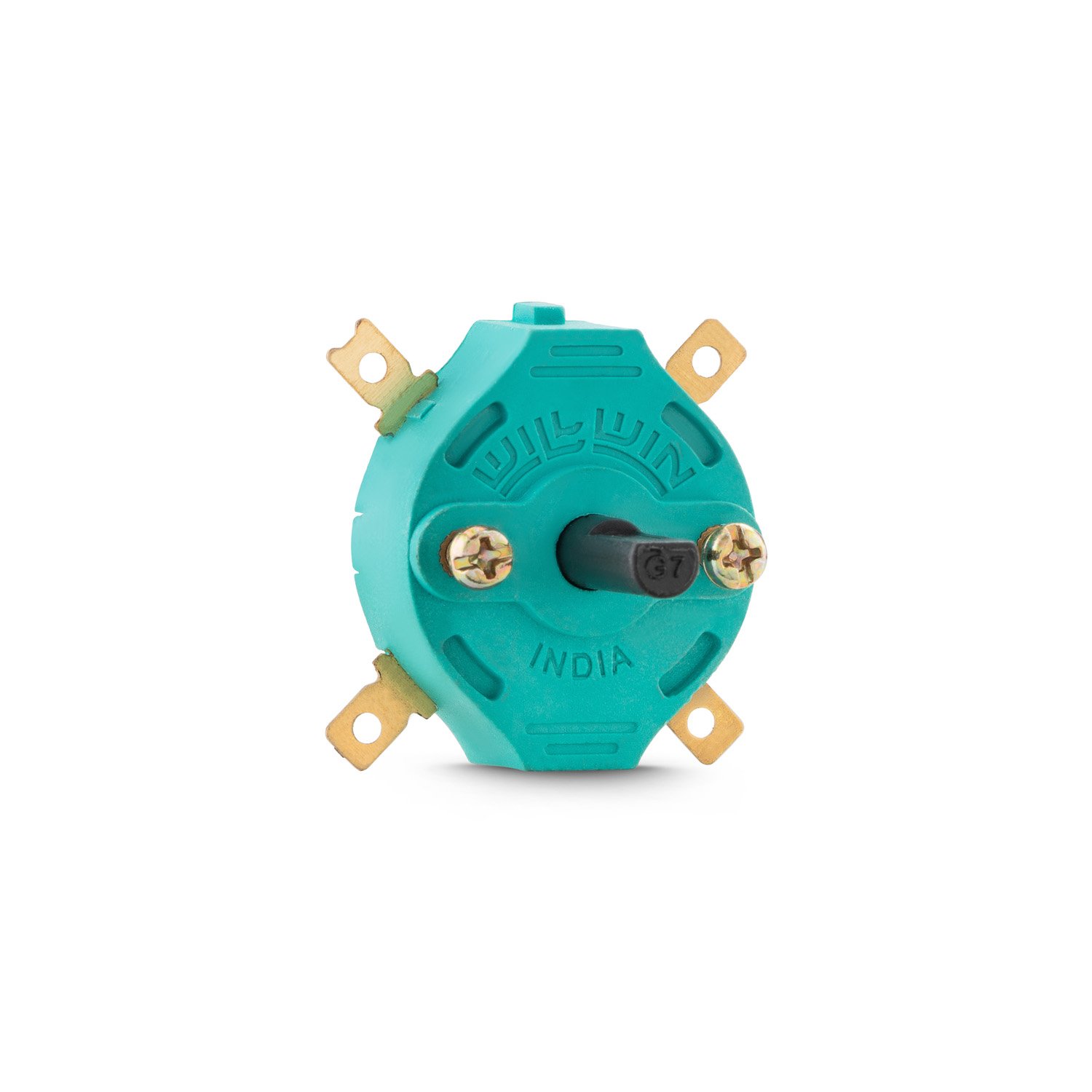
Our 503 Rotary Switch with Resistance, for example, is rated 250V – 6A. Check your motor’s rated current and pick a switch with margin.
2. Contact and terminal material
Current flows through the contacts and terminals, so this is where heat builds up. Brass contacts conduct well and resist wear. Tin-plated terminals resist corrosion in the humid air inside a cooler. Ask what the contacts and terminals are made of, and how thick the terminals are — on our 503 with Resistance they are 0.5 mm tin-plated.
3. Body material and fire resistance
The switch body must stay rigid when warm and must not feed a flame. Glass-filled nylon is much stronger and more heat-stable than plain plastic — our 503 with Resistance uses a 30% glass-filled nylon body. For coolers sold into very hot regions, or for brands that want an extra safety margin, choose a fire-resistant (FR) version such as our 503 Brass FR Rotary Switch.
4. Function: what does each position do?
Cooler switches combine several jobs: off, fan speeds, pump on/off, and sometimes swing. Before ordering, write down the function you need at each position and the wiring of your motor. Then match the switch to it.
A special case is the switch with a built-in resistance, which gives a single-speed motor three speeds. We explain how that works in our 3-speed cooler switch guide.
5. Detent feel
A good switch clicks firmly into each position and never rests between two. A soft or drifting detent leads to half-made contacts, which spark and overheat. Precision tooling keeps the click crisp through years of daily use. Turn a sample a few hundred times before you approve it.
6. Fit: shaft, knob and mounting
The switch must fit your control panel cut-out and your knob. Confirm the shaft shape and length and the mounting style with a sample in your own panel.
Our rotary switch range
| Series | Models | Key point |
|---|---|---|
| 501 | 501 Brass | Brass rotary switch |
| 502 | 502 Brass | Brass rotary switch |
| 503 | 503 Brass, 503 Brass FR, 503 with Resistance | FR = fire resistant; Resistance = single speed to 3 speed, 250V – 6A |
| WL169 | WL169GR, WL169BL, WL169WH | Three variants — GR, BL, WH |
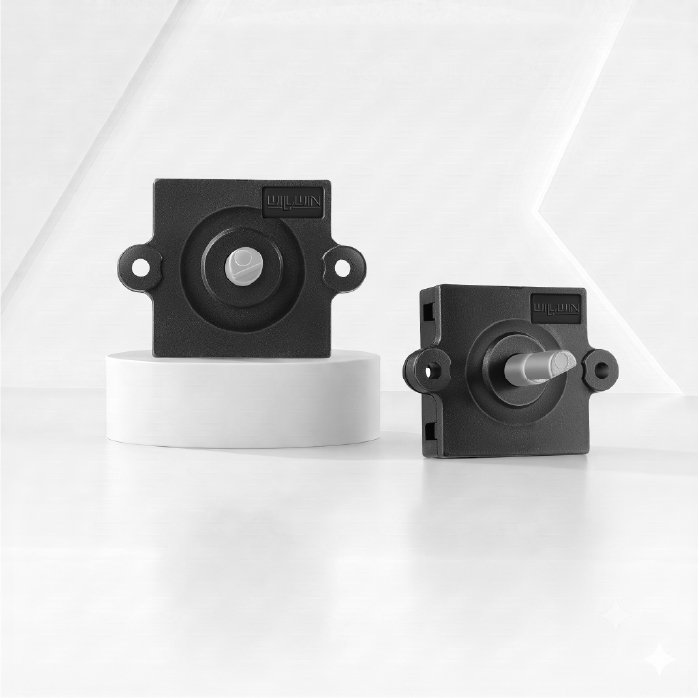
Share your function layout and load, and we’ll tell you which series fits. Browse all rotary switches.
Frequently asked questions
Which rotary switch is best for an air cooler?
One rated above your motor-plus-pump current, with brass contacts and a heat-stable body. Choose a fire-resistant version for hot regions.
What amp rotary switch do I need for a cooler?
Check the fan motor’s rated current, add the pump, and choose a switch with comfortable headroom.
Why does a cooler switch melt?
Usually from overload, loose terminals or a worn contact that sparks. A correctly rated switch with good terminals avoids it.
Do you supply switches to cooler brands?
Yes — OEM and bulk supply, alongside pumps and fan blades. See how one-source supply works.
Order samples
Send us your switch requirement or call +91 98116 63968. We supply cooler brands, distributors and dealers across India.
