

Pick a pump that is too small and the top of the cooling pads stays dry. Pick one that is too big and you waste power, splash water out of the distributor and shorten pad life. The right pump is the smallest one that wets every pad evenly from top to bottom.
Here’s how to choose — whether you are designing a new cooler model or replacing a pump in an existing one.
The three numbers on a pump
- Wattage (W) — how much electricity the pump draws. It is a rough size class, not a performance figure.
- Flow (LPM) — litres of water moved per minute. More pad area needs more flow.
- Lifting height / head (m) — how high the pump can push water. Tall coolers need more head.
A pump’s flow drops as height rises. At its maximum head, flow is close to zero. So always choose a pump whose maximum head is comfortably above the height of your water distributor.
Measure your cooler first
- Measure from the water level in the tank to the top of the distribution channel or pipe. That is your required head.
- Count the wetted pad sides — one (personal/tower), two or three (room/desert).
- Note the cabinet space where the pump sits, including the hose route.
Which wattage for which cooler
| Pump class | Best suited to | What to check |
|---|---|---|
| 15W | Personal and small room coolers with one pad face and short height | Enough head for the pad top; compact body |
| 20W | Most room coolers and mid-size desert coolers | Flow across 2–3 pad sides; protection option |
| 40W | Large desert, tower and commercial coolers with tall pads | Head above 2 m; thermal overload protection |
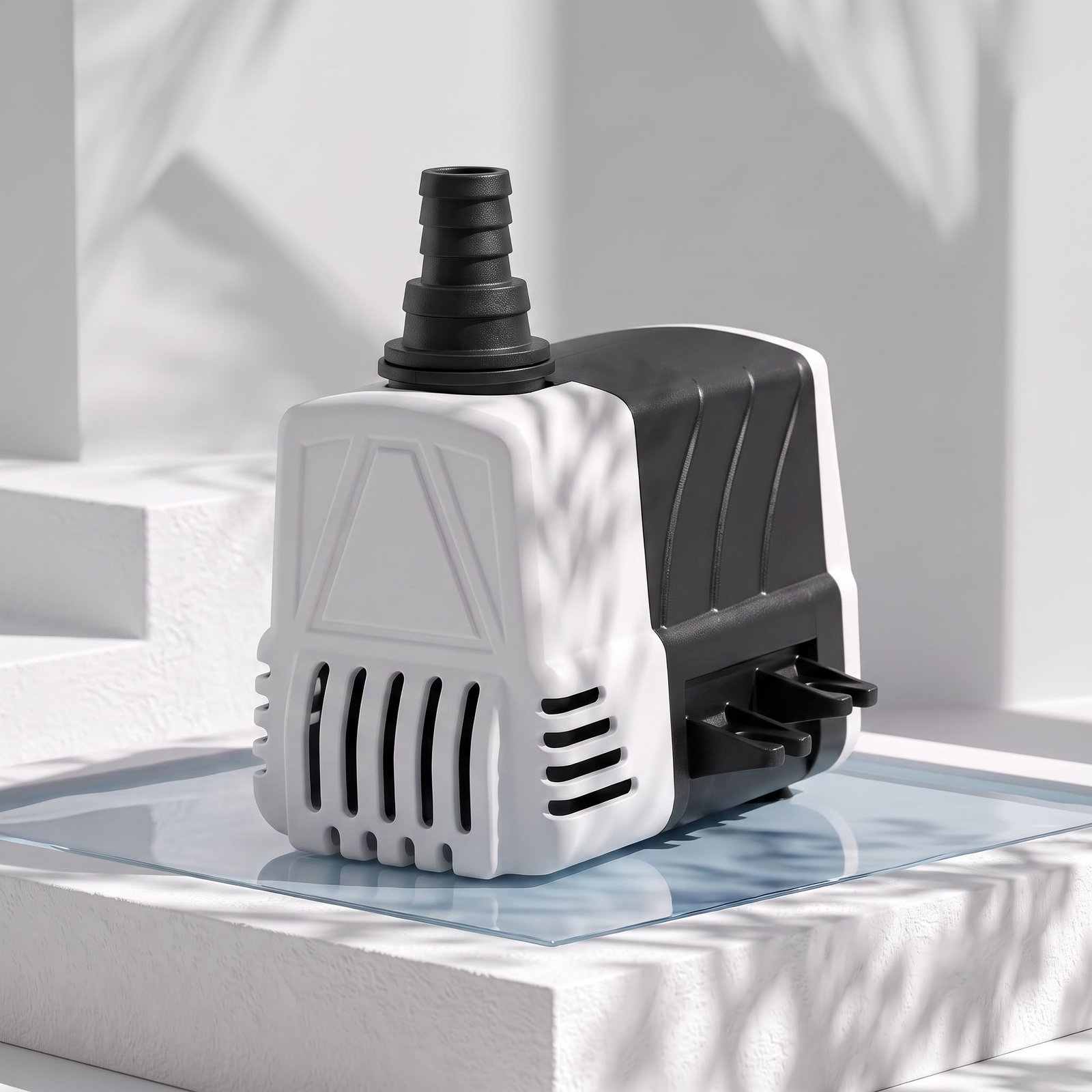
For reference, two models from our range:
- Evo Submersible Pump – 20W: 8 LPM flow, up to 1.85 m lifting height, 110–240V, 81×75×92 mm. Thermal overload protection available.
- Sobo Submersible Pump – 40W: 12 LPM flow, up to 2.5 m lifting height, 110–240V, 82×77×89 mm, thermal overload protection as standard.
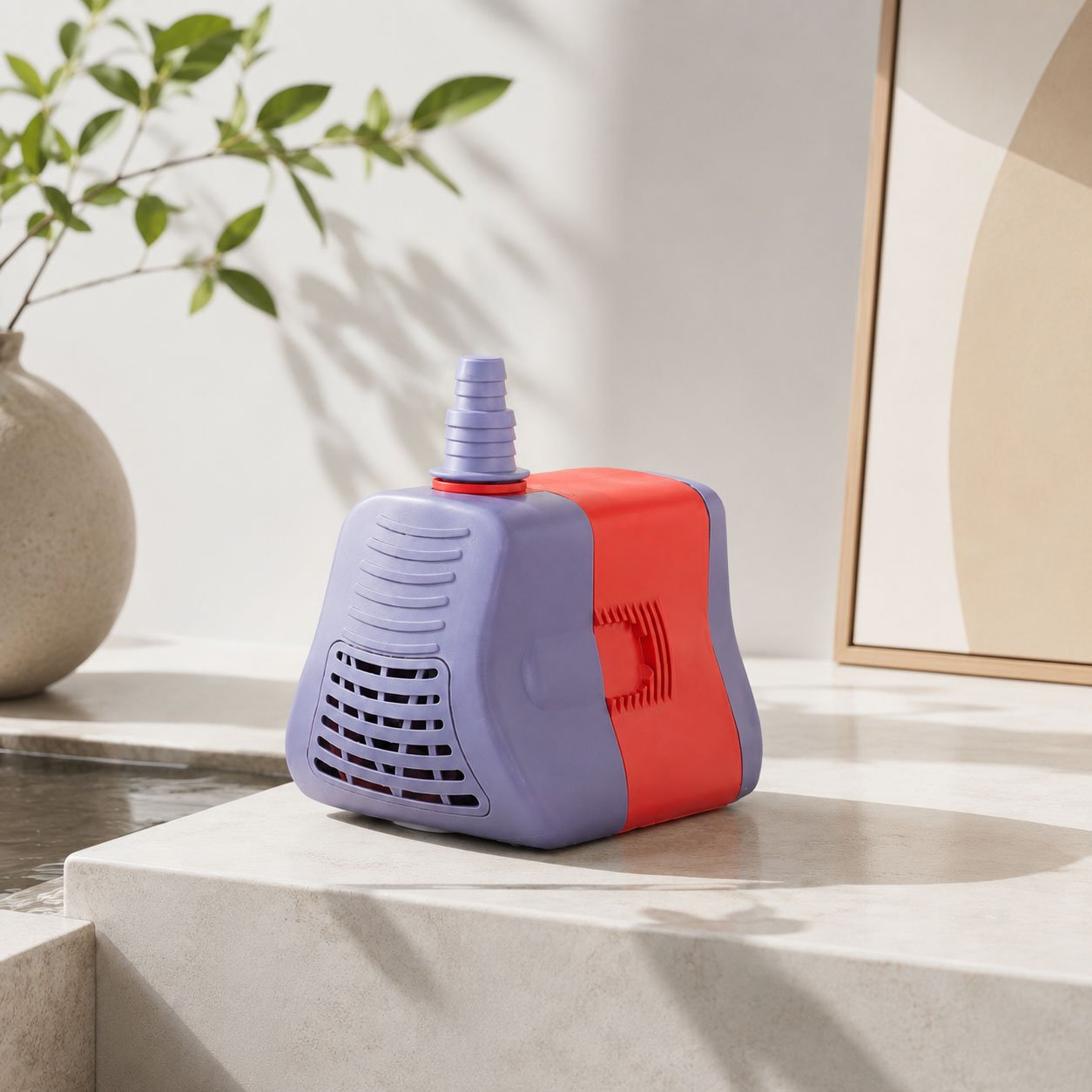
Going from 20W to 40W here adds 50% more flow and about 0.65 m more head — that is the difference between a room cooler and a tall commercial unit.
Is a higher-watt pump always better?
No. Extra flow beyond what the pads can absorb just runs off. That means more noise, faster scale build-up in the tank, and a higher bill over the season. In a small cooler, an oversized pump can also overflow the distribution tray.
The rule: match head first, then flow. Only step up a class if the smaller pump cannot reach the top of the pads.
Replacing a pump? Three quick checks
- Same or higher head than the original — check the old pump’s label.
- Nozzle size matches your hose. A threaded nozzle prevents leaks at the joint.
- Fits the bracket. Compare the footprint in mm before you buy.
If a pump has stopped working, it may not need replacing at all — see our cooler pump troubleshooting guide first. Buying in bulk? Read what to check in an air cooler pump manufacturer.
Frequently asked questions
Which is the best cooler pump for a desert cooler?
Most desert coolers need a 20W pump; very large or tall ones need 40W. Measure the head and count pad sides, then match it to the table above.
How many LPM does a cooler pump need?
It depends on pad area. As a guide, our 20W Evo gives 8 LPM, which suits most room coolers; the 40W Sobo gives 12 LPM for large units.
Can I use a 40W pump in a small cooler?
You can, but you’ll waste power and may overflow the tray. Use the smallest pump that wets the full pad.
Does a cooler pump work on low voltage?
Pumps rated for a wide input range keep working through dips. Ours run on 110–240V.
Need help matching a pump?
Send us your cooler’s dimensions and pad layout and we’ll recommend the right model from our 15W, 20W and 40W series. Talk to Willwin India, or browse all air cooler pumps.
